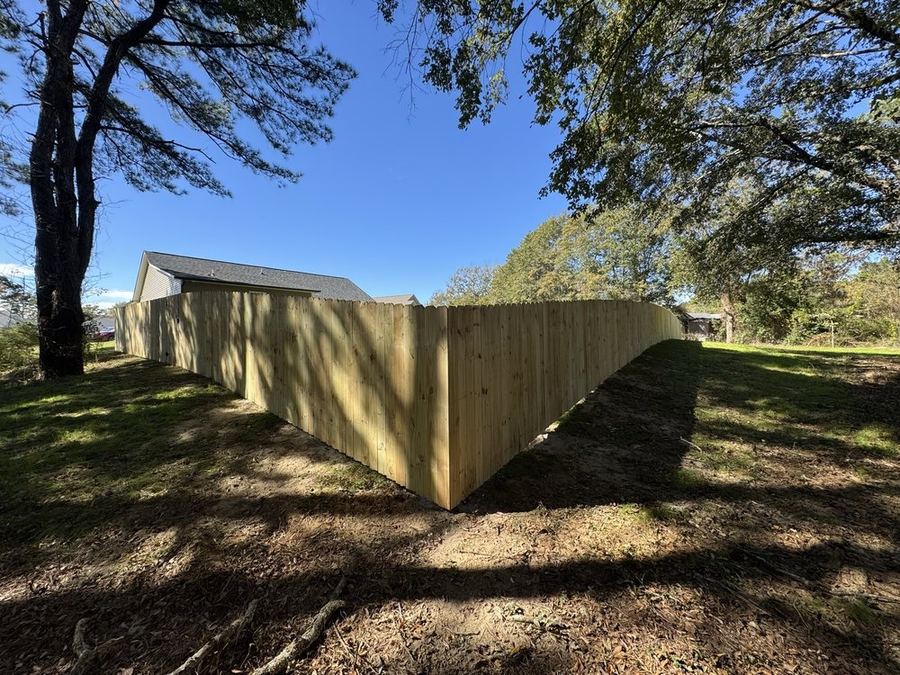
NC's climate is hard on fences. Summer humidity pushes 80-90% most days. Clay soil heaves and settles with rainfall. Summers push into the mid-90s, and winter ice storms aren't unusual. If you're choosing between wood and vinyl in the Triangle, the material decision matters more than it would in, say, Arizona.
We install both every week across Raleigh, Durham, Chapel Hill, and Cary. Here's an honest breakdown — not a sales pitch for one over the other.
Wood Fence in North Carolina
Pressure-treated Southern Yellow Pine is the most common fence material in the Triangle for good reason. It's widely available, locally produced, and performs well in NC's climate when installed properly. The key phrase: installed properly.
What "properly" means here:
- Posts set at least 30" deep in NC clay
- #2 Grade or better ground-contact pressure-treated lumber
- Post caps on every post to shed water
- Bottom rail at least 2" off the ground to prevent rot
- Staining or sealing every 2-3 years once the wood has dried (6-12 months after install)
With proper maintenance, a wood fence in the Triangle can last 20+ years. Without it — staining skipped, posts in standing water, bottom boards touching soil — you're looking at 8-12 years before the fence is a liability.
Best for: Homeowners who want maximum privacy, the warmest aesthetic, and don't mind periodic maintenance. Also the most budget-friendly option upfront.
Vinyl Fence in North Carolina
Our vinyl fence installation has gotten significantly better in the last decade. Modern vinyl fence with UV inhibitors and virgin PVC (as opposed to recycled material) handles NC summers well and doesn't rot, warp, or splinter. A quality vinyl privacy fence should look essentially the same in 20 years as it does on install day.
The trade-off is cost — vinyl runs $42-52/LF installed versus $35-42/LF for wood. On a typical 150 LF Triangle backyard, that's $1,000-1,500 more upfront. But factor in zero staining, zero sealant, zero board replacement, and vinyl often wins on lifetime cost.
One caveat specific to NC: cheap vinyl (often found at big-box discount prices) can yellow or become brittle in sustained UV exposure. We always spec commercial-grade vinyl with UV inhibitors — it costs a little more per panel but the difference over 10 years is dramatic.
Best for: Homeowners who want zero maintenance, HOA situations where white or tan fence is required, and anyone planning to stay in the home long-term.
The Honest Side-by-Side
| Factor | Wood | Vinyl |
|---|---|---|
| Upfront cost (150 LF) | $5,250–$6,300 | $6,300–$7,800 |
| Lifespan in NC | 15–25 years | 20–30+ years |
| Maintenance | Stain every 2-3 yrs | None |
| Privacy | Excellent | Excellent |
| NC climate rating | Good (with care) | Excellent |
| Aesthetic warmth | Natural, warm | Clean, modern |
The Bottom Line
If budget is the primary concern, wood is the right call — and installed properly, it'll serve you well. If you never want to think about the fence again and plan to be in the home 10+ years, vinyl's lifetime cost often edges ahead despite the higher upfront price.
We're happy to give you an honest quote on both so you can compare side-by-side. Call (919) 200-5882 or request a free estimate online.
Frequently Asked Questions
Serving Raleigh, Durham, Chapel Hill, Cary, Apex & surrounding Triangle communities.
Free estimates within 24 hours. Call (919) 200-5882.